
Introduction
Television has changed significantly over the past few decades. Traditional cable and satellite services, once the primary ways to access television content, are now being complemented by internet-based streaming technologies. One of the most widely discussed developments in this space is IPTV, a technology that delivers television content through internet networks rather than conventional broadcasting methods.
As more viewers seek flexible and on-demand entertainment options, understanding how IPTV works has become increasingly important. Services such as King TV and other IPTV providers have contributed to the growing popularity of this technology by offering access to live channels, movies, series, and on-demand content through internet-connected devices.
This guide explains how IPTV works, the technology behind it, its advantages, potential limitations, and what viewers should know before choosing an IPTV service.
What Is IPTV?
IPTV stands for Internet Protocol Television. Unlike traditional television services that rely on satellite signals, cable infrastructure, or terrestrial broadcasts, IPTV delivers content using internet protocols.
In simple terms, IPTV sends television programs and video content through an internet connection. Instead of receiving content through a dedicated cable or satellite dish, users stream content directly to their devices.
This approach allows viewers to watch content on a wide variety of devices, including:
- Smart TVs
- Android TV boxes
- Amazon Fire TV devices
- Smartphones
- Tablets
- Computers and laptops
- Streaming devices
The growing popularity of IPTV has transformed how audiences consume television and entertainment content around the world.
How IPTV Works
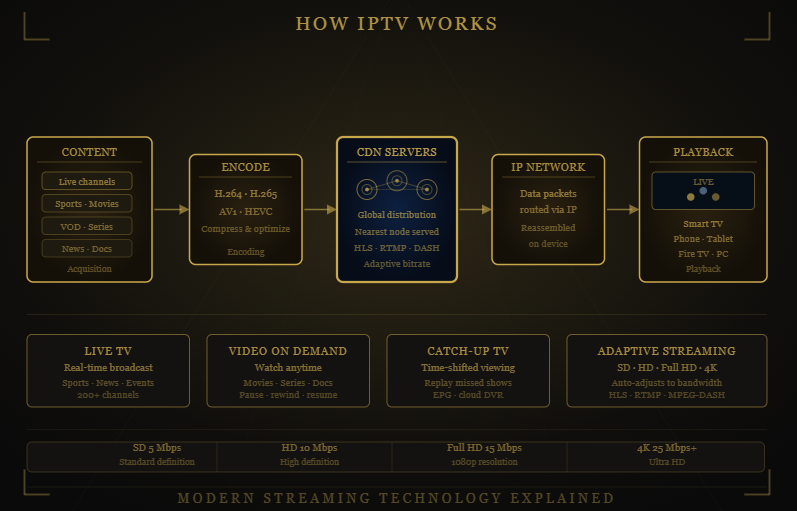
Understanding how IPTV works begins with understanding how video data travels across the internet.
Traditional television broadcasts send signals simultaneously to all viewers. IPTV works differently by delivering requested content through internet networks.
The process typically follows these steps:
1. Content Acquisition
The IPTV provider obtains television channels, movies, sports broadcasts, and other content from various sources.
These content streams are collected and prepared for internet delivery.
2. Encoding and Compression
Raw video files are extremely large and difficult to transmit efficiently.
To improve performance, content is encoded and compressed using modern video standards such as:
- H.264
- H.265 (HEVC)
- AV1
Compression reduces file sizes while maintaining video quality.
3. Content Storage and Servers
After encoding, content is stored on specialized servers.
These servers act as the backbone of IPTV systems and are responsible for delivering streams to viewers whenever requested.
4. Content Delivery Network (CDN)
Many IPTV platforms use Content Delivery Networks (CDNs).
CDNs distribute content across multiple geographical locations, helping reduce buffering and improving viewing performance.
Instead of retrieving content from a single server, users receive streams from the nearest available location.
5. User Request
When a viewer selects a channel, movie, or television show, the IPTV application sends a request to the provider’s server.
The server responds by transmitting the requested content through the internet.
6. Streaming Playback
The IPTV player receives the data stream and displays it on the user’s device in real time.
This entire process happens within seconds, creating a seamless viewing experience.
Main Types of IPTV Services
IPTV services generally fall into three major categories.
Live Television
Live IPTV functions similarly to traditional television.
Users can watch channels as they are being broadcast in real time.
Examples include:
- News channels
- Sports events
- Entertainment channels
- International programming
Live IPTV remains one of the most popular IPTV features.
Video on Demand (VOD)
Video on Demand allows viewers to select content whenever they want.
Instead of following a scheduled broadcast, users choose specific movies or television shows from a content library.
Benefits include:
- Flexible viewing schedules
- Pause and resume functionality
- Access to large content libraries
Time-Shifted Media
Time-shifted IPTV allows viewers to watch previously aired content.
Features may include:
- Catch-up television
- Replay functionality
- Recorded programs
This option helps viewers avoid missing their favorite shows.
IPTV vs Traditional Cable Television
Many consumers compare IPTV with conventional television services.
Delivery Method
Traditional television uses:
- Satellite signals
- Coaxial cable networks
- Broadcast towers
IPTV relies entirely on internet protocols.
Flexibility
IPTV offers greater flexibility because users can access content from multiple devices and locations.
Cable services often require specific hardware installations.
On-Demand Access
IPTV platforms commonly provide extensive on-demand libraries.
Traditional television is often centered around scheduled programming.
Device Compatibility
Most IPTV services support:
- Smart TVs
- Smartphones
- Tablets
- Computers
Traditional services may have more limited viewing options.
The Technology Behind IPTV Streaming
Several technologies work together to deliver IPTV content efficiently.
Internet Protocol (IP)
Internet Protocol forms the foundation of IPTV.
Every piece of data transmitted across the network is divided into packets.
These packets travel through internet infrastructure before being reassembled on the user’s device.
Streaming Protocols
Modern IPTV systems use streaming protocols to ensure smooth playback.
Common examples include:
- HTTP Live Streaming (HLS)
- Real-Time Messaging Protocol (RTMP)
- MPEG-DASH
These technologies help maintain video quality while adapting to changing internet speeds.
Adaptive Bitrate Streaming
Adaptive bitrate streaming automatically adjusts video quality according to available bandwidth.
Benefits include:
- Reduced buffering
- Improved stability
- Better user experience
Viewers with slower internet connections can continue watching without interruptions.
Internet Speed Requirements for IPTV
Internet speed plays a crucial role in IPTV performance.
Recommended minimum speeds typically include:
| Content Quality | Recommended Speed |
|---|---|
| SD Streaming | 5 Mbps |
| HD Streaming | 10 Mbps |
| Full HD Streaming | 15 Mbps |
| 4K Streaming | 25 Mbps or higher |
Actual requirements may vary depending on network conditions and the provider’s infrastructure.
Devices Commonly Used for IPTV
One reason IPTV continues to grow is its compatibility with numerous devices.
Smart TVs
Many modern Smart TVs include IPTV applications or support external IPTV players.
Android TV Boxes
Android-based devices remain popular due to their flexibility and broad application support.
Amazon Fire TV Devices
Fire TV products are frequently used for IPTV viewing because they are affordable and easy to configure.
Smartphones and Tablets
Mobile viewing enables users to watch content while traveling or away from home.
Computers
Windows, macOS, and Linux systems can all access IPTV services through compatible software or web browsers.
Advantages of IPTV
Understanding IPTV benefits helps explain why the technology has gained popularity worldwide.
Greater Content Accessibility
Viewers can access content from multiple devices and locations.
Flexible Viewing Experience
IPTV supports:
- Pause
- Rewind
- Fast-forward
- On-demand viewing
Wide Range of Content
Many IPTV platforms provide access to:
- Live channels
- Movies
- Series
- Sports programming
- International content
Efficient Bandwidth Usage
Modern compression technologies help reduce bandwidth consumption while maintaining high-quality video.
Potential Challenges of IPTV
Although IPTV offers numerous advantages, users should also understand potential limitations.
Internet Dependency
IPTV requires a stable internet connection.
Poor connectivity may result in:
- Buffering
- Playback interruptions
- Reduced video quality
Network Congestion
Heavy internet traffic can affect streaming performance during peak usage periods.
Device Compatibility Issues
Not every IPTV application works equally well across all devices.
Users may occasionally encounter software-related challenges.
Service Reliability
The quality of the viewing experience often depends on the provider’s infrastructure, server capacity, and content delivery systems.
Security Considerations for IPTV Users
Security is an important aspect of any internet-based technology.
Users should consider:
- Using strong passwords
- Keeping applications updated
- Installing software from trusted sources
- Securing home networks
- Using modern routers and firmware
Good cybersecurity practices help protect both devices and personal information.
How IPTV Is Changing the Entertainment Industry
The entertainment landscape continues to evolve as internet-based delivery methods become more common.
IPTV has contributed to several major trends:
Personalized Viewing
Users can select content based on their interests rather than following fixed broadcasting schedules.
Multi-Device Consumption
Audiences increasingly watch content across multiple screens throughout the day.
Global Content Access
Internet delivery enables viewers to discover programming from different regions and cultures.
Increased Demand for On-Demand Services
Modern viewers often prioritize flexibility and convenience over traditional viewing schedules.
The Role of King TV in Modern IPTV Streaming
King TV represents one example of how IPTV services have adapted to modern viewing habits.
Like many IPTV platforms, King TV leverages internet-based delivery systems to provide access to television content across compatible devices.
The broader IPTV industry continues to evolve through improvements in streaming technologies, server infrastructure, content delivery networks, and user experience enhancements.
As internet connectivity improves worldwide, IPTV platforms are likely to play an increasingly significant role in how audiences consume entertainment content.
Choosing an IPTV Service
When evaluating IPTV services, viewers may consider several factors:
- Content availability
- Streaming quality
- Device compatibility
- User interface
- Customer support
- Server reliability
- Feature availability
Comparing multiple providers can help users determine which option best aligns with their viewing preferences.
The Future of IPTV Technology
Several technological developments are expected to influence IPTV in the coming years.
These include:
- Faster broadband connections
- Expanded fiber-optic networks
- Improved video compression
- AI-driven content recommendations
- Enhanced cloud infrastructure
- Increased 4K and 8K content availability
As these technologies mature, IPTV experiences are expected to become even more efficient and user-friendly.
Frequently Asked Questions
What does IPTV stand for?
IPTV stands for Internet Protocol Television, a technology that delivers television content through internet networks rather than traditional broadcasting systems.
Is IPTV different from cable TV?
Yes. IPTV uses internet connections to stream content, while cable TV relies on dedicated cable infrastructure.
Can IPTV be used on Smart TVs?
Yes. Many Smart TVs support IPTV applications directly or through external streaming devices.
How much internet speed is needed for IPTV?
For HD streaming, around 10 Mbps is generally recommended. For 4K content, speeds of 25 Mbps or higher are often preferred.
Does IPTV support on-demand content?
Yes. Many IPTV services provide Video on Demand libraries containing movies, television shows, and other content.
Can IPTV be watched on multiple devices?
Most IPTV platforms support multiple devices, including smartphones, tablets, Smart TVs, computers, and streaming boxes.
Conclusion
Understanding how IPTV works helps explain why internet-based television continues to gain popularity among modern viewers. By delivering content through internet protocols rather than traditional broadcasting systems, IPTV offers flexibility, device compatibility, on-demand viewing, and access to a wide variety of entertainment options. Services such as King TV illustrate how IPTV technology is being used to meet changing consumer expectations in an increasingly connected world. As broadband infrastructure, streaming technologies, and content delivery systems continue to improve, IPTV is expected to remain a significant part of the future entertainment landscape.
Call to Action
Interested in learning more about IPTV technology and modern streaming solutions? Continue exploring industry developments, compare available services, and stay informed about the latest trends shaping the future of digital entertainment.