
Introduction
As IPTV continues to grow in popularity, one question consistently appears among consumers researching internet-based television services: Is IPTV legal? With thousands of IPTV services available worldwide and varying regulations across different countries, understanding the legal status of IPTV has become increasingly important for viewers.
IPTV technology itself is completely legitimate and widely used throughout the media and entertainment industry. Many major broadcasters, streaming platforms, telecommunications companies, and content providers use IPTV infrastructure to deliver television programming over internet networks. However, the legality of a specific IPTV service depends on several factors, including content licensing, distribution rights, and compliance with local laws.
For users considering services such as King TV or other IPTV providers, understanding how IPTV regulations work can help avoid confusion and ensure informed decisions. This guide explains IPTV legality, how licensing works, common misconceptions, legal risks, and what consumers should consider when choosing an IPTV service.
What Is IPTV?
Before discussing legality, it is important to understand what IPTV actually is.
IPTV stands for Internet Protocol Television, a technology that delivers television content through internet networks instead of traditional cable, satellite, or terrestrial broadcasting systems.
IPTV services may provide:
- Live television channels
- Sports programming
- Movies
- TV series
- Video-on-demand content
- Catch-up television
- Electronic Program Guides (EPG)
The technology itself is simply a method of content delivery and is not inherently legal or illegal.
Is IPTV Legal?
The short answer is:
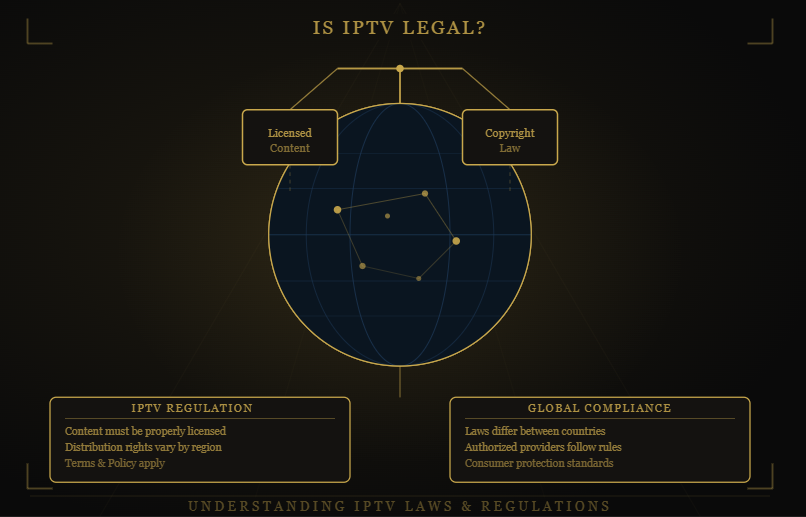
Yes, IPTV is legal when the provider has the proper rights and licenses to distribute the content it offers.
The legality of an IPTV service depends primarily on whether it has authorization from content owners, broadcasters, studios, sports organizations, and distribution partners.
Just as cable television companies must obtain rights to distribute channels, IPTV providers must also secure the necessary licensing agreements.
When a provider operates with proper permissions, IPTV services are generally considered legal.
Why IPTV Technology Is Legal
Many consumers mistakenly assume that IPTV itself is illegal.
In reality, IPTV technology is widely used by legitimate organizations around the world.
Examples include:
- Telecommunications companies
- Cable providers
- Streaming platforms
- Media networks
- Broadcasters
- Internet service providers
These organizations use IPTV technology to deliver content efficiently through internet infrastructure.
The technology functions similarly to many online streaming services that millions of people use every day.
What Determines Whether an IPTV Service Is Legal?
Several factors influence the legality of an IPTV provider.
Content Licensing
The most important factor is content licensing.
A provider must obtain permission from content owners before distributing:
- Television channels
- Movies
- Sports broadcasts
- Television series
- Premium content
Without appropriate licensing agreements, content distribution may violate copyright laws.
Distribution Rights
Content rights are often limited by:
- Geographic regions
- Languages
- Platforms
- Broadcast agreements
A provider may have rights to distribute content in one country but not another.
Compliance With Local Regulations
Each country has its own media and broadcasting regulations.
Legal IPTV providers generally comply with applicable requirements related to:
- Copyright laws
- Consumer protection
- Broadcasting standards
- Data privacy regulations
Legal IPTV Services vs Unauthorized IPTV Services
Understanding the difference between authorized and unauthorized IPTV providers is essential.
Authorized IPTV Services
Authorized providers typically:
- Obtain content licenses
- Follow copyright regulations
- Operate through registered businesses
- Comply with applicable laws
- Provide customer support
- Maintain transparent policies
Unauthorized IPTV Services
Unauthorized providers may:
- Distribute content without permission
- Ignore copyright agreements
- Operate anonymously
- Frequently change domains or platforms
- Offer content without clear licensing information
The legal risks associated with unauthorized services can vary depending on local laws and enforcement practices.
How Copyright Laws Affect IPTV
Copyright laws protect creators, broadcasters, production companies, and media organizations by granting exclusive rights over content distribution.
These rights often include:
- Reproduction
- Broadcasting
- Streaming
- Public performance
- Distribution
When an IPTV provider distributes copyrighted content without authorization, it may face legal action from rights holders.
Many countries actively enforce copyright regulations against unauthorized content distribution.
Why IPTV Laws Differ Between Countries
One reason IPTV legality can seem confusing is that regulations vary around the world.
Different countries have different approaches to:
- Copyright enforcement
- Broadcasting regulations
- Digital content distribution
- Consumer protections
As a result, what may be permissible in one jurisdiction may be restricted in another.
Consumers should always consider the laws applicable in their own country.
Common Myths About IPTV Legality
Several misconceptions continue to circulate regarding IPTV services.
Myth 1: IPTV Is Always Illegal
This is false.
IPTV technology is widely used by legitimate companies and broadcasters worldwide.
Myth 2: All IPTV Services Are the Same
Providers differ significantly in terms of licensing, operations, content offerings, and legal compliance.
Myth 3: Streaming Through the Internet Avoids Copyright Laws
Copyright protections generally apply regardless of whether content is delivered through traditional broadcasting or internet streaming.
Myth 4: IPTV Exists Outside Government Regulation
Many IPTV services operate within legal frameworks established by national governments and regulatory authorities.
How Consumers Can Evaluate IPTV Services
When researching IPTV providers such as King TV or other services, consumers can evaluate several factors.
Transparency
Reliable providers generally offer clear information regarding:
- Service features
- Subscription terms
- Support options
- Company information
Customer Support
Professional customer support often indicates a more structured operation.
Terms and Policies
Users should review:
- Terms of service
- Privacy policies
- Refund policies
- Acceptable use guidelines
Content Availability
Consumers should consider whether the provider appears to distribute content through authorized channels.
Potential Risks of Using Unverified IPTV Services
Consumers should understand that unverified IPTV services may present several risks.
Service Interruptions
Unauthorized services may experience:
- Domain changes
- Server instability
- Unexpected shutdowns
Security Concerns
Poorly managed services may expose users to:
- Malware risks
- Data privacy concerns
- Account security issues
Limited Customer Support
Some providers may offer little or no technical assistance.
Legal Uncertainty
Depending on local laws, using services with questionable licensing arrangements may create legal complications.
Security Best Practices for IPTV Users
Regardless of the provider selected, users should follow good security practices.
Use Strong Passwords
Avoid reusing passwords across multiple services.
Secure Home Networks
Protect Wi-Fi networks with modern encryption standards.
Update Devices Regularly
Software updates often improve security and stability.
Download Applications From Trusted Sources
Installing apps from reputable sources reduces security risks.
Review Privacy Policies
Understanding how user data is collected and managed is important.
The Role of Regulatory Authorities
Various organizations help oversee media distribution and copyright compliance.
Depending on the country, these authorities may regulate:
- Broadcasting standards
- Consumer protection
- Digital communications
- Copyright enforcement
Regulatory oversight helps protect both content creators and consumers.
How King TV Fits Into the IPTV Landscape
King TV is one example of an IPTV service operating within the growing internet television market. Like other IPTV providers, it uses internet-based technology to deliver content to compatible devices.
When evaluating King TV or any IPTV provider, users should consider:
- Service reliability
- Device compatibility
- Customer support
- Subscription terms
- Content offerings
- Compliance with applicable regulations
Objective evaluation helps consumers make informed decisions based on their individual entertainment needs.
The Future of IPTV Regulation
As IPTV adoption continues to increase globally, regulatory frameworks are expected to evolve alongside technology.
Several trends are likely to influence future IPTV regulations.
Stronger Digital Copyright Enforcement
Governments and rights holders continue developing methods to protect intellectual property.
Increased Consumer Protection
Regulators are focusing more attention on online service transparency and user rights.
Global Content Distribution Challenges
As content becomes increasingly international, licensing agreements may become more complex.
Enhanced Security Standards
Providers may face growing expectations regarding data privacy and cybersecurity practices.
Frequently Asked Questions
Is IPTV legal?
Yes. IPTV technology is legal when content is distributed through proper licensing agreements and in compliance with applicable laws.
Is IPTV technology itself illegal?
No. IPTV is simply a method of delivering television content through internet networks.
What makes an IPTV service legal?
Legal IPTV providers obtain the necessary rights and permissions to distribute the content they offer.
Do IPTV laws vary by country?
Yes. Copyright laws, broadcasting regulations, and enforcement practices differ between jurisdictions.
How can consumers evaluate IPTV providers?
Consumers should review transparency, customer support, policies, content availability, and overall service reliability.
Are all IPTV services licensed?
Not necessarily. Licensing arrangements vary between providers, making research important before subscribing.
Conclusion
The question “Is IPTV legal?” does not have a simple yes-or-no answer for every service. IPTV technology itself is completely legitimate and widely used throughout the entertainment industry. The key factor determining legality is whether a provider has the appropriate rights and licenses to distribute its content.
As IPTV continues expanding worldwide, consumers should focus on understanding how licensing, copyright laws, and local regulations affect content distribution. Services such as King TV and other IPTV providers operate within a rapidly evolving digital media landscape where transparency, compliance, and user trust are increasingly important.
Before selecting any IPTV service, users should carefully evaluate provider policies, content offerings, support quality, and regulatory compliance. Taking the time to research available options can help create a safer, more reliable, and more informed streaming experience.
Ready to learn more about IPTV services? Compare providers carefully, review their policies, understand your local regulations, and choose an IPTV solution that aligns with your viewing preferences and legal requirements.