
Introduction: Why Choosing the Right IPTV Subscription Plan Matters
The streaming industry has become increasingly competitive, giving users more options than ever before when it comes to television entertainment. Among these choices, selecting the right IPTV subscription plan is one of the most important decisions for any viewer. A poorly chosen plan may lead to unnecessary costs or missing essential features, while a well-matched subscription can deliver a far more flexible and efficient viewing experience compared to traditional cable services. IPTV platforms such as King TV are part of this evolving ecosystem, offering structured subscription models designed to suit different user needs, budgets, and viewing habits. Understanding what these plans typically include, how they are structured, and how they compare within the wider IPTV market is essential for making an informed decision. This article provides a detailed and objective breakdown of IPTV subscription plans, premium streaming features, and key evaluation criteria to help users choose the most suitable option for their household.
What Is King TV and Who Is It Designed For?
King TV is an Internet Protocol Television service that delivers live TV channels, on-demand content, and international programming through an internet connection instead of traditional satellite or cable systems. It is designed for users who want a flexible, internet-based alternative to conventional television while still maintaining access to live broadcasts and a wide content library. The platform generally appeals to three main user groups: sports viewers who prioritize live event access, international audiences seeking channels from their home countries, and general users looking for a cost-effective replacement for cable subscriptions.
Sports and Live Event Viewers
This group values real-time access to sports leagues, tournaments, and global competitions without needing separate premium sports packages.
International and Multilingual Audiences
Many users rely on IPTV to access content in different languages, including news, entertainment, and cultural programming from various regions.
General Cord-Cutters
Users who prefer a simplified and affordable alternative to traditional cable services while maintaining broad content access fall into this category.
Understanding IPTV Subscription Plan Structures
IPTV subscription plans are usually built around several core elements that define pricing, flexibility, and overall value. These structures are fairly consistent across the industry and help differentiate between entry-level and premium offerings.
Subscription Duration Options
Most IPTV providers offer monthly, quarterly, semi-annual, and annual plans. Monthly subscriptions provide flexibility with minimal commitment, while annual plans typically offer the lowest cost per month. Longer commitments generally provide better value for users confident in their service choice.
Simultaneous Device Connections
The number of devices that can stream at the same time is a key factor in IPTV plans. Single-connection plans suit individual users, while multi-connection plans are designed for households with multiple viewers.
Channel Lineup and Content Access
Higher-tier plans often include expanded channel lists, additional international content, and larger video-on-demand libraries. However, most standard plans already provide sufficient variety for everyday use.
Stream Quality Levels
Depending on the provider, streaming quality may range from SD to HD and 4K. Some services include high-definition streaming across all plans, while others reserve advanced quality for premium tiers or specific channels.
King TV Subscription Plans: General Market Structure
While exact pricing and features may vary over time, IPTV subscription models like those associated with King TV generally follow a predictable structure based on user needs and usage intensity.
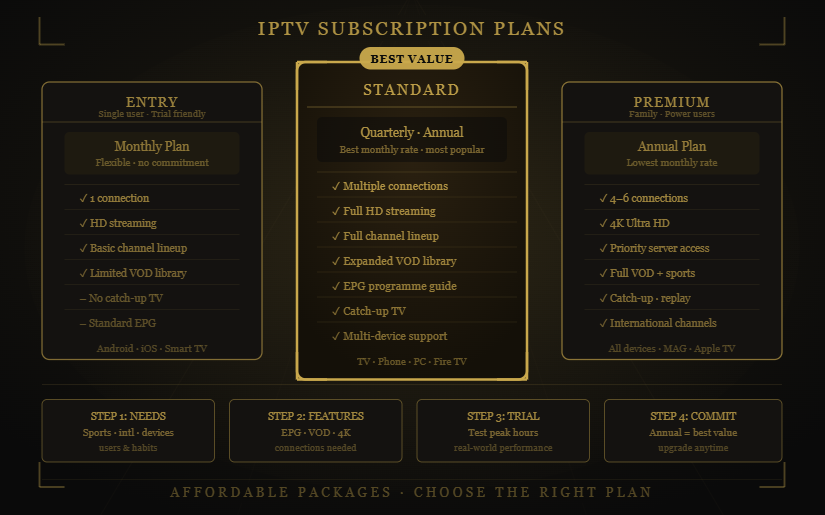
Entry-Level Plans
Entry-level subscriptions are designed for users testing the service or those with minimal viewing requirements. These plans usually include a single connection, standard or HD streaming, and access to a basic channel lineup with a limited VOD library.
Standard or Mid-Tier Plans
Mid-tier plans are the most commonly selected option, offering a balanced combination of affordability and features. They typically include multiple connections, full channel access, HD streaming, EPG functionality, and a more extensive on-demand library.
Premium or Family Plans
Premium plans are designed for households with multiple users or advanced viewing needs. These often include several simultaneous connections, priority server access, improved stability during peak hours, and enhanced content availability including 4K support where available.
Trial or Short-Term Plans
Many IPTV services offer short trial periods that allow users to test streaming quality, channel availability, and device compatibility before committing to a full subscription. This step is highly recommended for evaluating performance in real-world conditions.
What Defines a Premium IPTV Streaming Experience?
Not all IPTV plans offer the same level of quality. A premium streaming experience is defined by several key features that significantly improve usability and performance.
HD and 4K Streaming Quality
A high-quality IPTV plan should provide stable HD streaming as a minimum standard, with 4K available for supported content and devices.
Electronic Program Guide (EPG)
An EPG improves navigation by displaying current and upcoming programming schedules, making the viewing experience more organized and user-friendly.
Video on Demand (VOD) Libraries
A strong VOD library includes a wide selection of movies and TV series across different genres, regularly updated and easy to navigate.
Catch-Up and Replay Features
Catch-up functionality allows users to watch previously aired content, reducing reliance on fixed broadcast schedules and improving flexibility.
Stable Streaming Infrastructure
Premium IPTV services invest in server optimization and redundancy systems to reduce buffering and maintain consistent playback quality.
Multi-Device Compatibility
A quality IPTV plan should function smoothly across smartphones, smart TVs, streaming devices, and computers without performance loss.
Comparing IPTV Plans to the Broader Market
IPTV subscription plans exist within a wide market that ranges from low-cost services with unstable performance to premium platforms offering high reliability and advanced features.
Budget-level services often attract users with very low pricing but may suffer from buffering issues, limited support, and inconsistent channel availability. Mid-tier providers generally offer the best balance between cost and performance, making them the most popular choice for everyday users. Premium IPTV services focus on infrastructure quality, content stability, and enhanced user experience, often competing directly with traditional cable packages in terms of performance while remaining more flexible.
How to Choose the Right IPTV Subscription Plan
Step 1: Analyze Viewing Habits
Understanding how many people watch content simultaneously and what type of content is most important helps narrow down suitable plans.
Step 2: Define Essential Features
Identify must-have features such as sports channels, international content, or multi-device support before comparing plans.
Step 3: Compare Cost Efficiency
Evaluate the real monthly cost of each plan by dividing long-term subscriptions into monthly equivalents to identify the best value.
Step 4: Use Trial Options
Testing a service during peak and off-peak hours provides a realistic view of performance and reliability.
Step 5: Review User Feedback
Independent reviews and community discussions can reveal long-term performance trends that are not visible in promotional descriptions.
Step 6: Consider Upgrade Flexibility
A good IPTV provider should allow easy upgrades without losing account data or requiring complex reconfiguration.
IPTV vs Traditional Cable Television
IPTV offers several advantages over traditional cable systems, including lower cost, greater flexibility, and multi-device accessibility. Unlike cable services, IPTV does not require long-term contracts or physical installation. Users can stream content from anywhere with an internet connection, making it significantly more adaptable to modern lifestyles. While cable television still offers strong stability in some regions, IPTV continues to close the gap with improved infrastructure and streaming technologies.
Frequently Asked Questions About IPTV Subscription Plans
What is included in a basic IPTV subscription plan
Basic plans usually include access to live channels, standard HD streaming, and a limited VOD library with one simultaneous connection.
Can I upgrade my IPTV subscription later
Most IPTV services allow users to upgrade their plans at any time, often with prorated pricing adjustments.
Do IPTV services offer free trials
Many providers offer short trial periods so users can test performance before committing to a full subscription.
How many devices can use one IPTV account
The number of supported devices depends on the subscription plan, ranging from one to multiple simultaneous connections.
Is IPTV affected by internet speed
Yes, IPTV performance depends heavily on internet speed and stability, especially for HD and 4K streaming.
Conclusion: Choosing the Right Plan for Long-Term Value
Selecting the right IPTV subscription plan requires a balance between cost, features, and actual viewing needs. Understanding how different plan tiers operate helps users avoid overpaying for unnecessary features or choosing a plan that does not meet their expectations. IPTV platforms like King TV operate within a competitive market where value is determined not only by price but also by stability, content variety, and user experience. By carefully analyzing viewing habits, testing services when possible, and comparing available options, users can make informed decisions that lead to a more reliable and enjoyable streaming experience.