
Introduction: How Television Is Being Reinvented
The way people consume television content has changed dramatically over the past decade as audiences gradually move away from traditional cable and satellite systems toward more flexible, internet-based solutions. This transition is not just a technological upgrade but a complete shift in how content is accessed, delivered, and experienced. At the center of this transformation is IPTV (Internet Protocol Television), a system that delivers live channels, on-demand videos, and digital programming through internet connections instead of conventional broadcast infrastructure. Unlike older models of television that rely on fixed schedules and limited device compatibility, IPTV offers a more dynamic and user-centered experience. In discussions about the evolving IPTV ecosystem, platforms such as “King TV” are often mentioned as examples within the broader market landscape, reflecting the growing diversity of internet-based television services. As global audiences increasingly adopt cord-cutting habits, IPTV continues to gain relevance as a key part of the future of digital entertainment. This article explores IPTV technology in detail, its evolution, core features, challenges, and its role in reshaping modern television consumption.
What Is IPTV and Why It Is Becoming More Popular
IPTV, short for Internet Protocol Television, is a method of delivering television content through internet networks rather than traditional terrestrial, cable, or satellite systems. Instead of broadcasting all channels simultaneously, IPTV sends only the requested content directly to the viewer’s device, making the process more efficient and interactive. This system allows users to stream live TV, movies, series, and international channels on a wide range of devices including smart TVs, smartphones, tablets, and computers. The rising popularity of IPTV is driven by several factors, including improvements in global internet infrastructure, increased availability of high-speed broadband, and changing viewer expectations. Modern audiences now prioritize flexibility, on-demand access, and multi-device compatibility over rigid broadcast schedules. Additionally, traditional cable subscriptions have become more expensive, pushing many users toward more cost-effective digital alternatives. As a result, IPTV has evolved from a niche technology into a mainstream method of consuming television content worldwide.
The Evolution of Television: From Analog Broadcast to Digital Streaming
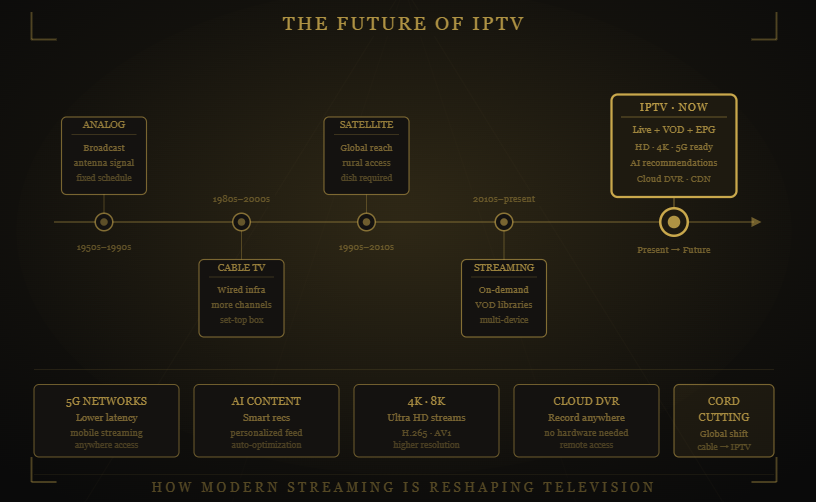
Television has undergone several major transformations since its inception, each driven by technological innovation. The earliest television systems relied on analog broadcast signals transmitted through antennas, offering limited programming and inconsistent signal quality. With the introduction of cable television, viewers gained access to a wider range of channels delivered through wired infrastructure, significantly improving reliability and content variety. Satellite television further expanded access by reaching remote and rural regions, providing global coverage that cable systems could not achieve. However, the rise of broadband internet marked the beginning of a new era in media consumption. Streaming platforms demonstrated that audiences were willing to move away from fixed schedules in favor of on-demand viewing experiences. Over time, IPTV emerged as a hybrid solution that combines the structure of traditional television with the flexibility of internet streaming. Unlike early streaming services that focused primarily on video libraries, IPTV integrates live broadcasting, time-shifted content, and on-demand services into a single unified system, redefining what television means in the digital age.
How IPTV Technology Works in Practice
IPTV operates through a complex system of digital data transmission, network protocols, and streaming technologies. When a user selects a channel or program, a request is sent to a server that delivers the content in small data packets over the internet. These packets are then reassembled by the user’s device into continuous audio and video streams. Several technologies work together to ensure smooth performance. Content Delivery Networks (CDNs) distribute servers across multiple geographic locations to reduce latency and improve loading speeds. Adaptive Bitrate Streaming adjusts video quality in real time based on the user’s internet connection, preventing interruptions during fluctuations in bandwidth. Multicast streaming is commonly used for live television, allowing a single stream to serve multiple viewers simultaneously, which improves efficiency. Unicast streaming, on the other hand, is used for on-demand content where each user receives an individual stream. Together, these systems create a stable and scalable infrastructure capable of supporting large audiences across different regions.
Key Characteristics of a High-Quality IPTV Experience
A well-structured IPTV service is defined by several essential features that directly influence user experience and performance.
Channel Variety and Content Coverage
A strong IPTV system provides a wide selection of channels covering entertainment, sports, news, documentaries, and international programming. This diversity ensures that users from different regions and interests find relevant content.
HD and 4K Streaming Quality
Modern IPTV platforms prioritize high-definition and 4K resolution streaming, delivering sharp visuals that match current display technologies. Poor quality or frequent buffering is typically a sign of an underperforming service.
Electronic Program Guide (EPG)
The EPG acts as a digital TV schedule, allowing users to see current and upcoming programs. This improves navigation and helps users plan their viewing more effectively.
Video on Demand (VOD) Libraries
VOD systems give users access to movies and series anytime, removing dependency on broadcast schedules and increasing flexibility.
Multi-Device Compatibility
IPTV services are designed to work across multiple devices such as smart TVs, smartphones, tablets, PCs, and streaming devices, ensuring seamless access regardless of platform.
Stability and Uptime Performance
Reliable servers and stable infrastructure are essential, especially for live sports and news where interruptions significantly impact the viewing experience.
IPTV and the Global Shift Toward Cord-Cutting
The global transition away from traditional cable television, known as cord-cutting, continues to accelerate as users seek more flexible and cost-efficient entertainment options. IPTV plays a central role in this movement by replicating traditional live TV functionality while enhancing it with internet-based features. Unlike standalone streaming platforms that focus mainly on on-demand libraries, IPTV combines live broadcasting, replay options, and VOD content into a unified system. As internet infrastructure improves worldwide, IPTV adoption is increasing across both developed and emerging markets. Affordable streaming devices and smart TVs have also made IPTV more accessible to non-technical users, helping it move further into mainstream adoption.
International Content and Global Audience Demand
One of IPTV’s strongest advantages is its ability to deliver international channels to a global audience. This is particularly important for diaspora communities who want access to content from their home countries. Traditional television services often offer limited international packages, while IPTV can provide a much broader selection of global programming. This includes news, entertainment, cultural shows, and sports from multiple regions. As multicultural societies continue to grow, demand for multilingual and international content is increasing. IPTV is uniquely positioned to meet this demand by offering flexible access to diverse media libraries across borders.
Challenges and Limitations of IPTV Systems
Despite its advantages, IPTV also faces several challenges that affect both users and providers.
Content Licensing and Legal Concerns
Not all IPTV services operate with proper licensing agreements, making it important for users to verify legality before subscribing.
Service Reliability Variations
Quality can differ significantly depending on the provider’s infrastructure, server capacity, and maintenance.
Internet Dependency
IPTV requires a stable internet connection, meaning poor connectivity can directly impact viewing quality.
ISP Throttling Issues
Some internet providers may reduce streaming speeds during high traffic periods, which can affect IPTV performance.
Technological Innovations Driving IPTV Forward
IPTV continues to evolve through advancements in networking and artificial intelligence. The expansion of 5G networks is expected to improve mobile streaming quality by reducing latency and increasing speed. AI-driven systems are being used to personalize recommendations and optimize streaming performance. Cloud-based DVR solutions also allow users to record and access content from any device without physical storage limitations. These innovations are making IPTV more adaptive, efficient, and user-focused.
How Users Evaluate IPTV Services Before Choosing
Users typically assess IPTV services based on several key criteria including content variety, streaming quality, device compatibility, and legal compliance. Trial periods are often used to test real-world performance before committing. Independent reviews and user feedback also play a major role in decision-making. Internet speed requirements must be considered to ensure smooth HD or 4K playback. Customer support responsiveness is another important factor when evaluating overall service reliability.
Frequently Asked Questions About IPTV
What is IPTV and how does it work
IPTV delivers television content through internet networks by transmitting digital data packets that are decoded by user devices in real time.
Is IPTV legal
IPTV technology is legal, but legality depends on whether the provider has proper rights to distribute content in a given region.
What internet speed is required for IPTV
Standard streaming requires around 5 Mbps, HD requires 10–25 Mbps, and 4K requires at least 25 Mbps for stable performance.
Can IPTV replace cable TV
Yes, IPTV can fully replace traditional cable by offering live TV, on-demand content, and multi-device access in one system.
What devices support IPTV
IPTV works on smart TVs, smartphones, tablets, computers, and devices such as Fire Stick, Android boxes, and Apple TV.
Conclusion: The Digital Future of Television
Television has entered a fully digital era where IPTV plays a central role in shaping how content is delivered and consumed. By combining live broadcasting with on-demand flexibility, IPTV offers a more modern and adaptable viewing experience compared to traditional systems. Although challenges such as licensing, connectivity, and service reliability still exist, continuous technological improvements are addressing these limitations. As internet infrastructure expands globally, IPTV is expected to become even more widespread and influential. The shift toward internet-based television is no longer emerging—it is already established, and IPTV stands at the core of this ongoing transformation in global media consumption.