
Introduction
Television has evolved significantly over the past few decades. While traditional cable and satellite services once dominated home entertainment, internet-based streaming solutions have transformed how people access and consume content. One of the most important developments in this shift is IPTV technology.
If you have researched online television services, you have likely come across the term IPTV. Many users are curious about what IPTV is, how it works, and why services such as King TV and other IPTV providers have become increasingly popular worldwide.
Understanding IPTV is important for anyone considering modern streaming solutions. Unlike conventional television delivery methods, IPTV uses internet networks to transmit content directly to viewers, offering greater flexibility, device compatibility, and content accessibility.
This guide explains what IPTV is, how IPTV works, its main features, benefits, challenges, device compatibility, and what users should know before choosing an IPTV service.
What Is IPTV?
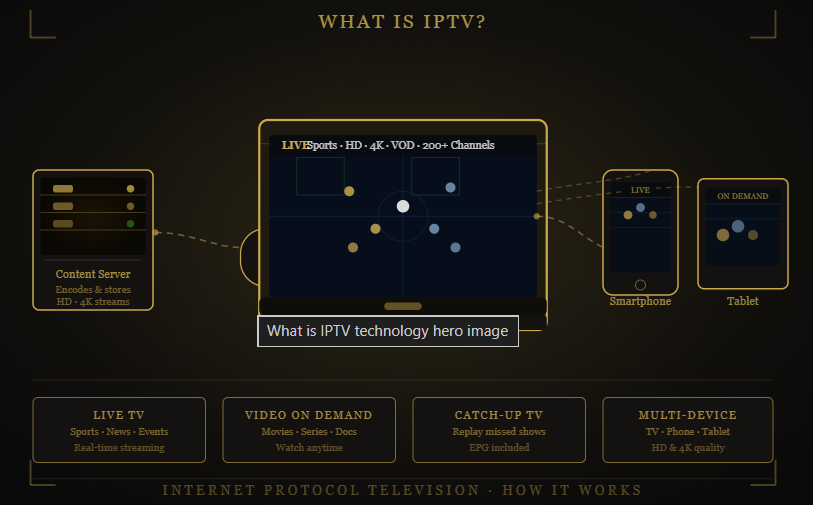
IPTV stands for Internet Protocol Television.
In simple terms, IPTV is a method of delivering television content over internet protocol (IP) networks instead of traditional cable, terrestrial, or satellite broadcasting systems.
With IPTV, television channels, movies, sports events, documentaries, and on-demand content are transmitted through an internet connection and displayed on compatible devices.
Unlike traditional television systems that continuously broadcast channels to all viewers, IPTV delivers content only when a user requests it, making the experience more personalized and efficient.
Services such as King TV utilize IPTV technology to provide access to various forms of entertainment through internet-connected devices.
How IPTV Works
To understand IPTV, it helps to examine how content travels from the provider to the viewer.
Content Acquisition
The process begins with television content being collected from broadcasters, content creators, and media distributors.
This may include:
- Live television channels
- Sports broadcasts
- Movies
- TV series
- News programming
- Documentaries
Encoding and Compression
Raw video files are extremely large and require compression before being transmitted efficiently.
IPTV systems typically use modern video compression technologies such as:
- H.264
- H.265 (HEVC)
These formats reduce bandwidth requirements while maintaining video quality.
Content Storage
Video content is stored on dedicated servers that manage user requests and content delivery.
Providers organize content into:
- Live channels
- Video-on-demand libraries
- Catch-up television
- Recorded programs
Internet Delivery
When a viewer selects content, the IPTV system sends video data through internet protocol networks directly to the user’s device.
Playback
An IPTV application or compatible media player receives the stream and displays it on the screen in real time.
Types of IPTV Services
Most IPTV platforms offer three primary categories of content.
Live Television
Live IPTV streams television channels as events occur.
Examples include:
- Sports broadcasts
- News channels
- Entertainment programming
- International channels
Live IPTV closely resembles traditional television viewing while using internet-based delivery.
Video on Demand (VOD)
Video on Demand allows users to watch content whenever they choose.
Popular VOD categories include:
- Movies
- TV series
- Documentaries
- Children’s programming
Unlike live television, viewers are not restricted by broadcast schedules.
Catch-Up TV
Catch-up television allows users to watch programs after their original broadcast time.
This feature is especially useful for viewers who miss live broadcasts and want to watch content later.
Why IPTV Has Become So Popular
Several factors contribute to the rapid growth of IPTV services.
Convenience
Users can access content from virtually anywhere with an internet connection.
Device Flexibility
IPTV works across multiple devices rather than being limited to a single television.
Extensive Content Availability
Many IPTV services combine live channels and on-demand content within one platform.
Improved User Experience
Modern IPTV applications often provide:
- Search functionality
- Personalized recommendations
- Favorites lists
- Electronic Program Guides
High-Quality Streaming
Many IPTV providers now support:
- HD streaming
- Full HD streaming
- 4K Ultra HD streaming
Devices Compatible with IPTV
One of the biggest advantages of IPTV is its broad device compatibility.
Common IPTV-compatible devices include:
Smart TVs
Many modern Smart TVs support IPTV applications directly.
Android TV Devices
Android TV systems provide access to numerous IPTV applications through the Google Play Store.
Amazon Fire TV Stick
Fire TV devices are among the most popular IPTV streaming platforms.
Smartphones and Tablets
Both Android and iOS devices support IPTV applications.
Computers
Users can watch IPTV on:
- Windows PCs
- Mac computers
- Laptops
IPTV Set-Top Boxes
Dedicated IPTV hardware remains popular among some users who prefer a traditional television viewing experience.
IPTV vs Traditional Cable Television
Many consumers compare IPTV to cable television when evaluating entertainment options.
Content Delivery
Cable television uses physical cable infrastructure.
IPTV uses internet networks.
Device Support
Cable services often focus on television receivers.
IPTV supports multiple device types.
Viewing Flexibility
IPTV allows content access from various locations with internet connectivity.
Interactive Features
Many IPTV services provide advanced functionality beyond traditional television systems.
IPTV vs Streaming Services
Although IPTV and streaming services both use the internet, there are important differences.
IPTV Typically Includes
- Live television channels
- Electronic Program Guides
- Sports broadcasts
- Traditional channel lineups
Streaming Platforms Typically Focus On
- On-demand content
- Original programming
- Personalized libraries
Many IPTV providers combine both live television and on-demand content into a single service.
What Is an Electronic Program Guide (EPG)?
An Electronic Program Guide, commonly called an EPG, functions as a digital television guide.
EPGs help users:
- Browse channels
- View schedules
- Check upcoming programs
- Access program descriptions
A quality EPG significantly improves the IPTV viewing experience.
Internet Requirements for IPTV
A stable internet connection is essential for IPTV performance.
Recommended speeds include:
Standard Definition (SD)
3–5 Mbps
High Definition (HD)
5–10 Mbps
Full HD
10–15 Mbps
4K Streaming
25 Mbps or higher
Connection stability often has a greater impact than raw download speed alone.
Advantages of IPTV
There are several reasons why consumers continue adopting IPTV technology.
Multi-Device Access
Users can stream content on different devices using the same account.
Greater Content Variety
IPTV often combines television channels, movies, and series within a single platform.
Flexible Viewing
Viewers can watch content when and where they choose.
Interactive Features
Modern IPTV applications frequently include advanced navigation tools and search functions.
Potential Cost Benefits
Depending on the provider and region, IPTV services may offer alternatives to traditional television subscriptions.
Potential Challenges of IPTV
While IPTV offers many advantages, there are also challenges users should consider.
Internet Dependence
IPTV relies entirely on internet connectivity.
Buffering Issues
Poor network performance can affect streaming quality.
Device Compatibility Concerns
Not every IPTV application works equally well across all devices.
Service Quality Differences
The viewing experience varies significantly between providers.
Security Best Practices for IPTV Users
Maintaining account and device security is important.
Use Strong Passwords
Avoid weak or easily guessed passwords.
Secure Your Network
Protect Wi-Fi connections using strong encryption.
Keep Devices Updated
Software updates often improve both performance and security.
Download Apps From Trusted Sources
Only install IPTV applications from reputable providers.
Legal Considerations for IPTV
The legality of IPTV depends on several factors, including licensing agreements and local regulations.
Users should:
- Understand local laws
- Review provider policies
- Verify content distribution rights when possible
- Choose services that comply with applicable regulations
Legal requirements vary from one country to another.
How King TV Fits Into the IPTV Industry
King TV is an example of an IPTV service that delivers television content through internet-based technology. Like many IPTV providers, it offers access to live television channels, entertainment programming, sports content, and on-demand viewing options.
When evaluating King TV or any IPTV provider, users should compare:
- Content availability
- Streaming quality
- Device support
- User experience
- Customer support
- Reliability
Comparing providers based on objective criteria helps users choose services that best fit their viewing preferences.
The Future of IPTV
The IPTV industry continues to evolve rapidly as internet technology improves.
Several emerging trends include:
Expanded 4K and 8K Streaming
Higher-resolution content is becoming increasingly accessible.
Artificial Intelligence Recommendations
AI-powered systems help viewers discover relevant content.
Cloud-Based Recording
Cloud DVR functionality continues to grow in popularity.
Faster Content Delivery
Advanced streaming technologies reduce buffering and improve reliability.
Enhanced Multi-Screen Experiences
Future IPTV platforms will likely offer even smoother transitions between devices.
Frequently Asked Questions
What does IPTV stand for?
IPTV stands for Internet Protocol Television, a technology that delivers television content through internet networks.
How does IPTV work?
IPTV transmits television channels and on-demand content through internet protocol networks rather than traditional cable or satellite systems.
Can IPTV be used on Smart TVs?
Yes. Many Smart TVs support IPTV applications directly.
What internet speed is recommended for IPTV?
HD streaming generally requires 5–10 Mbps, while 4K streaming benefits from 25 Mbps or higher.
What types of content does IPTV provide?
Most IPTV services offer live television, sports, movies, TV series, video-on-demand content, and catch-up television.
Is IPTV replacing traditional television?
Many consumers are increasingly adopting IPTV because of its flexibility and internet-based delivery, although traditional television services remain widely used.
Conclusion
Understanding what IPTV is and how it works is essential for anyone exploring modern television solutions. IPTV technology has changed how viewers access content by delivering television programming directly through internet networks rather than traditional broadcasting methods.
With support for live channels, on-demand libraries, multi-device streaming, and advanced interactive features, IPTV continues to grow as a preferred entertainment option worldwide. Services such as King TV demonstrate how IPTV platforms can bring together diverse content and flexible viewing experiences through internet-based technology.
As internet infrastructure continues to improve and streaming technology advances, IPTV is expected to play an even greater role in the future of television. Whether you are new to IPTV or researching different providers, understanding the fundamentals of IPTV technology will help you make more informed decisions about your entertainment options.
Ready to explore IPTV further? Compare features, evaluate device compatibility, review internet requirements, and choose an IPTV solution that best matches your viewing preferences and household needs.